Mexican Must-Haves
We might be biased… but Mexican food is one of the hottest cuisines in demand right now.
Okay… We’re definitely biased. But it’s true! Technavio revealed that the global Mexican food market size is forecast to increase by 114.3 Billion USD, at a CAGR of 6.4% between 2024 and 2029. That’s a whole lotta tacos!
Of course, Mexican covers far more than tacos. Diving into another culture’s cuisine can seem daunting, so in this blog we’ve rounded up some of the most popular Mexican Must-Haves and frequently asked questions about Mexican food.
Tacos
Pronunciation: ta-KOH
Meaning: Spanish for ‘wedge’ or ‘light meal’
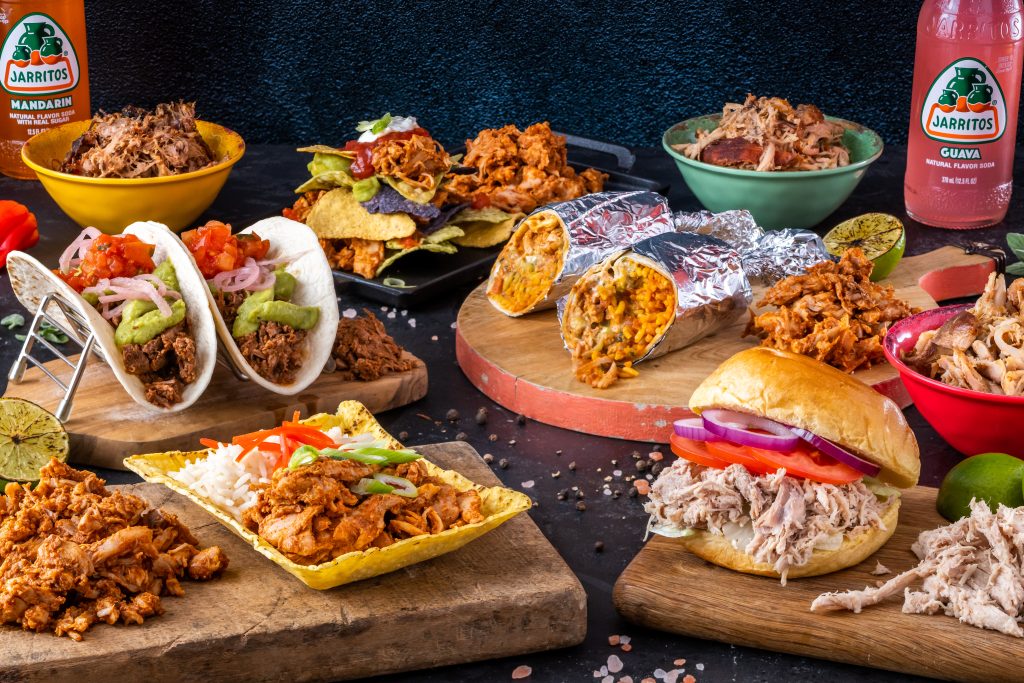
The icon itself, tacos consist of three components: a protein (meat, beans, etc), sauce or salsa, and topping to garnish (such as guac or sour cream). The quintessential hard shells made from yellow corn tortillas were actually popularised state-side in the 50s and 60s. For the authentic thing, serve on soft flour tortillas.
Taquitos
Pronunciation: tah-KEE-toh
Meaning: Spanish for ‘small taco’
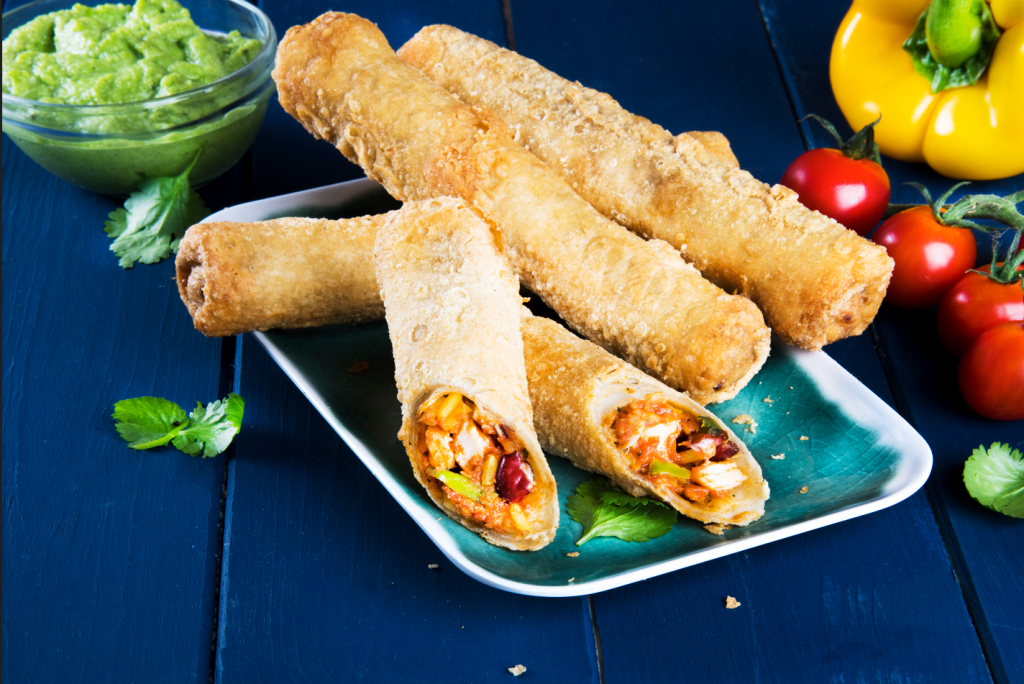
Similar to tacos, taquitos are small tortillas, wrapped around a filling then fried to develop a crispy exterior. Typically made with corn tortillas, Funnybones’ version uses flour tortillas for a higher quality. Choose from three delicious flavours; medium-spiced Fajita Chicken – diced chicken, bell peppers, and onion, coated in the vibrant zing of fajita spices – vegetarian-friendly hot Jalapeno Cheese – featuring a blend of creamy, stretchy cheese and herbs, with punchy green jalapeno – or Spicy Beef – made with minced beef, peppers, and onions.
Dish up a sharing plate to create taquito roulette or opt for a traditional serving of two taquitos with sour cream, salsa, and guacamole to dip – such as our La Mexicana Premium Guacamole. Made with Hass avocado, this dip features aromatic garlic with vibrant citrus for the perfect blend.
Burrito
Pronunciation: bur-REE-toe
Meaning: Spanish for ‘little donkey’
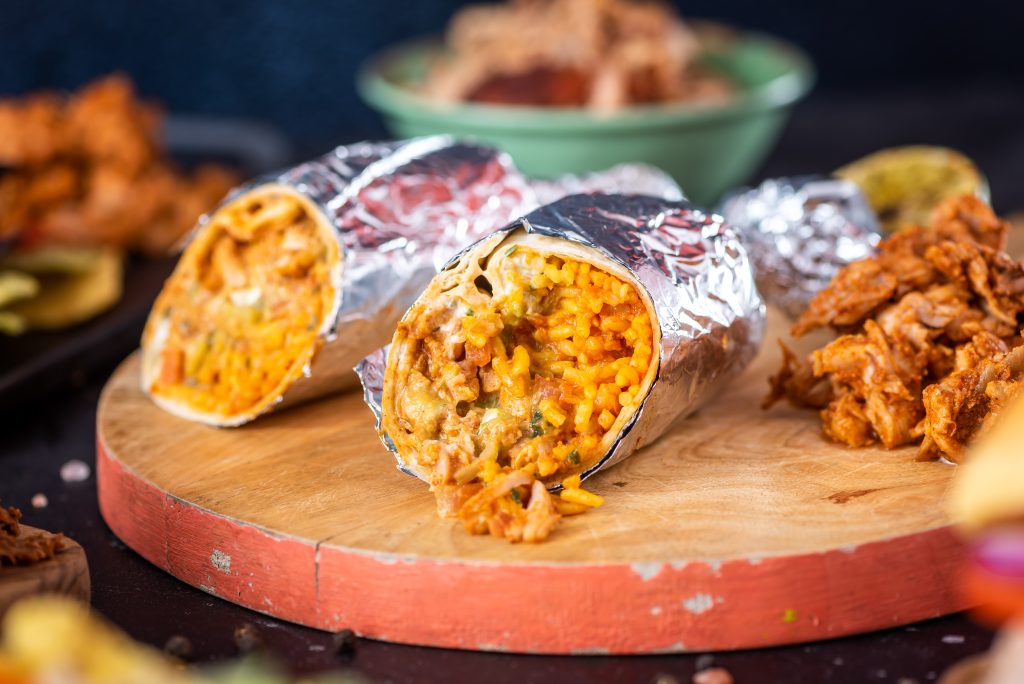
One of the great things about Mexican cuisine is how versatile ingredients can be, meaning they’re used across multiple dishes. In this case, protein, rice, beans, cheese, lettuce, guacamole, salsa, sour cream, jalapeno, and tortillas are all broadly used.
The flour tortilla is sometimes lightly grilled or steamed to soften it, making it more pliable, which allows it to adhere to itself when wrapped.
Quesadilla
Pronunciation: kay-sah-DEE-yah
Meaning: Spanish for ‘cheese cake’
A full quesadilla involves two tortillas sandwiched together with cheese (the ‘cake’), but is more commonly served as a single tortilla, filled, folded, and grilled, earning it the nickname ‘Mexican toastie’. Other fillings, such as veggies and pulled meats are often added to create a more substantial meal.
Try our Rio Pacific Pulled Smoked Meats, which are ready to customise with your sauce or seasoning of choice. Using cuts of meat chosen to deliver maximum flavour, the range includes pork shoulder, chicken thigh, and beef brisket. All are authentically smoked with hickory wood chips in an open smoker for up to 14 hours, resulting in a deep natural smoke flavour, dark outer char, and moist, tender texture.
For even greater convenience, our La Mexicana range offers two ready-to-use flavours; Al Pastor Chicken and Birria Beef. The chicken is seasoned with an authentic blend of achiote paste, chilli, garlic, oregano, and cumin, and punctuated with sweet pineapple juice. Most notable for Mexico’s famous street-food tacos with the same name, Al Pastor is now widely used across a variety of dishes.
Similarly, La Mexicana Birria Beef is extremely versatile, and is characterised by earthy undertones which help to balance the complex profile of mild spices, cumin, cloves, and oregano.
The conveniently pre-seasoned meats guarantee flavour profile consistency for returning customers, whilst minimising preparation time, so they’re ideal for fast-paced kitchens.
Enchilada
Pronunciation: ehn-chih-LAH-dah
Meaning: Spanish for ‘season with chilli’
Enchiladas are classically made with corn tortillas, but more commonly feature flour tortillas these days. The fillings are similar to a burrito, with the option to mix and match various meats, cheese, beans, potatoes, and vegetables – but the dish is then covered with chilli pepper sauce and finished in the oven like cannelloni.
Chimichanga
Pronunciation: chih-mee-CHAHNG-gah
Meaning: Spanish for ‘trinket’
Legend has it Chimichanga was invested when a chef knocked a burrito into a fryer, resulting in some colourful language. Not wanting to waste it, they rescued it from the fryer and tried some… and were pleasantly surprised at how tasty it turned out! They were dubbed ‘Chimichangas’ as a play on some of the words said when they were dropped in the fryer. Modern variations often omit the rice found in a traditional burrito.
Pastel Azteca
Pronunciation: pah-stel ahs-Tay-kah
Meaning: Spanish for ‘Aztec cake’
This dish can easily be called a Mexican lasagne. Using the same ground beef or pork base used in Italian cooking, with a similar tomato base (with the addition of chillies to add some oomph!), the layers are built with tortillas instead of pasta sheets. Top with cheese and baker in the oven.
Tlayuda
Pronunciation: tal-U-da
Meaning: Spanish for ‘thin tortilla’
If Pastel Azteca is ‘Mexican Lasagne’, then Tlayuda is Mexican Pizza! Featuring a large tortilla topped with salsa or sauce, grated cheese, and strips of meat and/or vegetables, then baked in the oven. This dish may not be as well known as icons like tacos, but is simple to throw together, and uses similar ingredients – meaning chefs can easily add it to the menu to expand their Mexican range with minimal effort.
Need more ideas? Get in touch with our friendly Funnybones customer service team!
Phone: 01707 321 234
Email: info@gkco.com